Situation
Ten lifestyle group, 2024
UX and UI Lead
Journey mapping
Team Leader
User Research
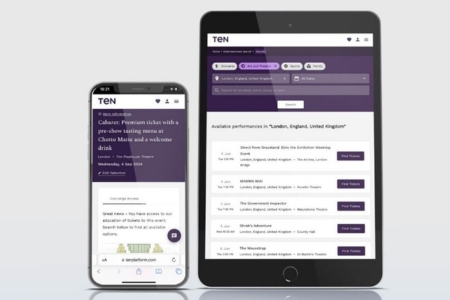
Ten Lifestyle Group, a global concierge service for high-net-worth and mass affluent individuals, identified an opportunity to enhance their offerings by creating a digital self-serve ticketing platform. This feature, named Ten Box Office, aimed to provide exclusive access to premium events worldwide for their members, by merging under one roof different event APIs providers and their inventories. This initiative aimed to drive engagement and retention of Ten’s members, providing a global inventory for members, ultimately boosting conversions and NPS score throughout the whole journey.
As the UX and UI lead, I was tasked to be “the bridge” of different teams working on it (Business, Product, UI, Tech, API Partners) making sure we followed our north star and objectives without loosing track of the time scale given. Also,y goal was to future proof the feature with the use of AI paradigms to maximise management efficiency and discoverability of a very big inventory.
I’m very proud of this features, from the initial phases to the final go-live, as it encompassed multiple levels of problem solving that needed to be seen as a whole: technical constraints, user-centred approach, UI consolidation, and business requirements.
Tasks
As the UX and UI lead for Ten Box Office, I was responsible for:
- Overseeing the entire UX plan for Ten Box Office, including managing the Design System updates
- Integrating multiple global API partners under a unified interface by researching each provider and theirs tech specs, finding overlaps in BE points and use them to create what info members would see on the FE.
- Creating a seamless user experience for discovering and booking premium events, taking into consideration the design system already in place and the new feature that were needed.
- Implementing AI-driven categorization to standardize event taxonomy across different APIs. This was a very interesting part of the feature, that made the managing much easier and user focused, with categories that could be changed using a CMS rather than involving development.
- Ensuring cross-selling capabilities with other Ten services, by surfacing the right message in the right part of the user journey, using ad-hoc components.
- Meeting strict timeline constraints while delivering a high-quality product
This project required balancing innovation with user-centric design and a pre-existing design system to create a unique, globally-integrated ticketing service, all while working within a strict timeline and limited resources.
Actions
As the UX and UI lead, I took several key actions to ensure the successful ideation, development, and launch of this innovative ticketing platform, coordinating the UX, UI and product discovery teams, often being hands-on projects:
- API Integration and Information Architecture
- Led the initial API discovery phase with Product and Business Analyst teams. This meant going through different documentation, often written in different formats. The use of AI was paramount to help navigate the documents and finding overlaps on BE points
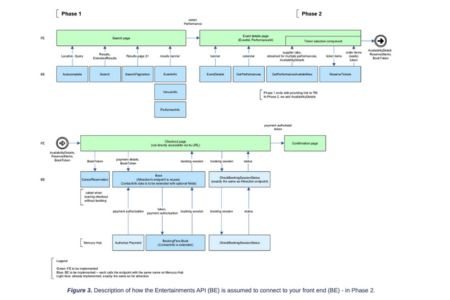
- I was a core player in the design of a unified interface to seamlessly integrate multiple global API partners (Mercury HUB) and normalise their different BE points. This was done through careful analysis of the documents, competitor research to understand what to present to the final users, avoiding duplication of info, and eventually linking with engineers to build the “normalisation” layer
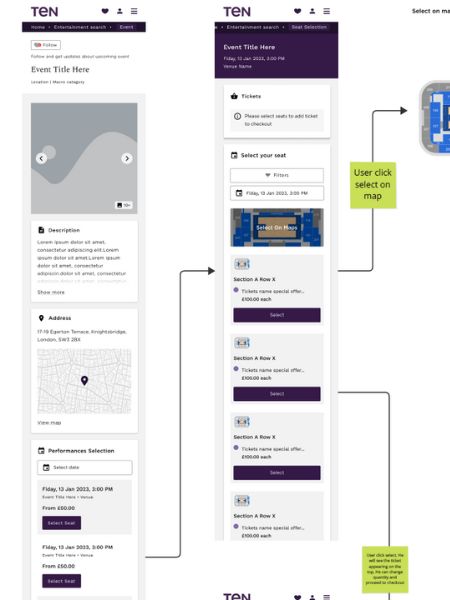
- I led the creation of comprehensive wireframes and user journey maps to facilitate the process
- User Research and Experience Optimization
- I led the UX research to identify pain points in the previous ticketing flow, and find out what our members wanted from the feature. This was done through remote surveys and remote 1-2-1 interviews with real members.
- The insights gathered were then analysed and cross-checked with our internal personas, so to catch any overlap or deviation from them and inform design and business mdecisions. The keywords “global”, “personal”, and “don’t make me think” were the main drivers for users.
- Design System Expansion and UI Creation
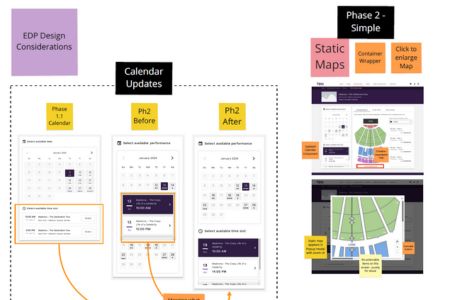
- I led the consolidation of the existing design system to accommodate new features and components, like the seat map view.
- Oversaw the entire UI creation process, prioritizing essential features due to time constraints, and introducing new tools to speed up the process, always assuring that accessibility goals were met.
- Developed UI components for cross-selling, including homepage banners and post-booking eCRM elements to drive more traffic to the page. The latter was done in collaboration with the eCrm team.
- Cross-functional Collaboration and Project Management
- I worked closely with Product Managers, developers, and business stakeholders to align the UX vision with business goals and technical constraints
- Together with the PMs assigned to the project, I managed timelines and resources to meet strict deadlines
- Presented UX concepts and research findings to stakeholders and senior management to make sure everyone had a clear vision of what we were building, and why.
- Quality Assurance and Post-launch Monitoring
- After launch, I led the usability evaluations to assess the effectiveness of the user interface and features.
- I led the monitoring phase of the feature during the critical post-launch period to ensure smooth operation and user satisfaction were met. Especially when where the features we’re affecting operational teams.
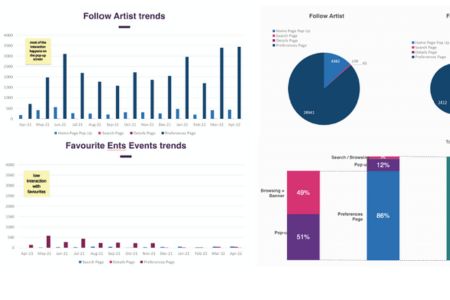
- Gathered and analyzed user feedback for continuous improvement through data tools (Amplitude, Tableau, HotJar)to ensure we could continuously measure the success of the project.
Throughout the process, I balanced innovation with user-centric design principles to create a unique, globally-integrated ticketing service for high-net-worth individuals, all while working within a strict timeline.
Results
The launch of Ten Box Office has yielded significant results, positioning it as a standout innovation in the ticketing industry.
Since its launch, Ten Box Office has driven higher engagement and conversion rates. Members who purchase tickets now frequently explore complementary services such as dining (+25%) and hotel (+13%) bookings, showcasing the platform’s success in cross-selling and enriching the overall customer experience. The implementation of an AI-driven categorization system has enhanced event discoverability, enabling users to find relevant shows and experiences more efficiently.
The impact of Ten Box Office has not gone unnoticed. It has been recognized as a finalist for TheTicketingBusiness Awards 2025, a prestigious accolade that celebrates leadership and innovation in the ticketing industry.

 Fabio Fodaro | Digital Design